Finding mental health care that seems custom to you is harder than it should be. A lot of people say it feels like they’re just checking boxes, not really being seen. At Oberidon Health, the focus is different. Care starts by listening to your unique experiences, symptoms, background, and objectives, and then crafts a plan that fits your life, not one that forces you into a rigid model.
We provide compassionate, evidence-based telemedicine psychiatric care. Services include complete psychiatric examinations and individualized medication management for eligible patients located in Georgia, Arizona, Idaho, New Mexico, and Washington at the time of the appointment. The goal is simple: professional mental health support that is accessible, respectful, and collaborative.
Why Personalized Psychiatric Care Matters
Mental health disorders are rarely the same from one person to another. Depression, anxiety, ADHD, bipolar spectrum disorders, OCD, and other mental illnesses present differently based on someone’s medical history, life circumstances, sleep patterns, relationships, culture, and previous treatment experiences. A one-size-fits-all approach sometimes leaves people feeling disregarded or stuck with solutions that don’t fit their reality.
Personalized care starts with curiosity and listening well. This includes finding out what is happening for you personally. What symptoms are getting in the way of your everyday life? What has or has not helped in the past? What feels vital to you right now? What sort of support is practical given your schedule and environment? And when treatment is organized around that entire picture, people are more likely to feel engaged, grasp their alternatives, and stick with a plan that makes sense for them.
This approach also acknowledges medication as one tool, not an automatic first step for everyone. Some people benefit from medication management; some may need therapy referrals, lifestyle changes, further medical examination, or a combination of services. It’s still all about what is clinically relevant for the patient sitting in front of the provider.
How Oberidon Health Builds Personalized Care
Thorough Psychiatric Evaluations
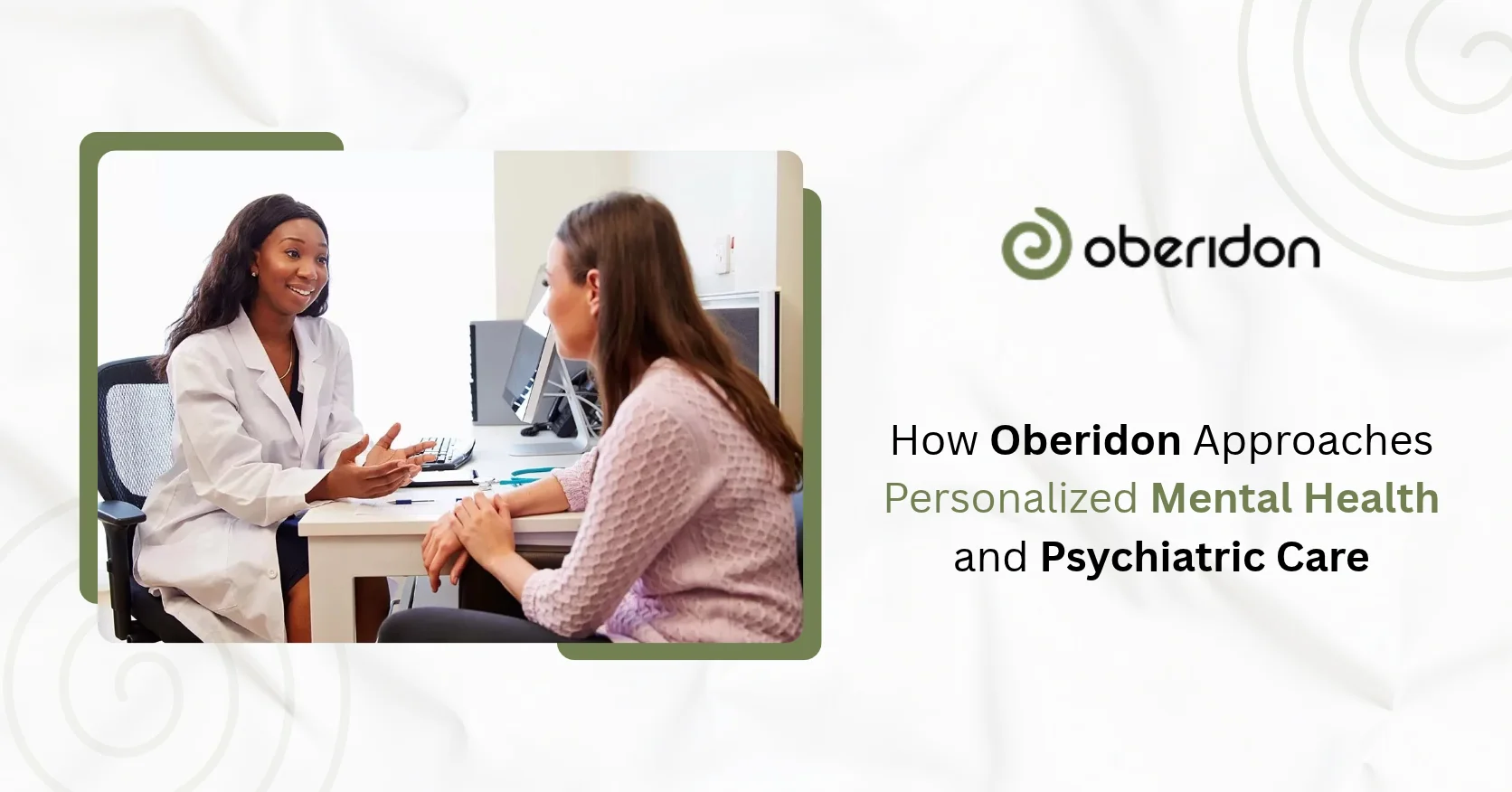
A solid evaluation is the foundation. At Oberidon Health, a psychiatric evaluation is a conversation in-depth, not rushed, and far from a checklist. The topic usually includes:
- Current symptoms and issues
- Prior diagnosis or treatment experience
- Current and former drugs
- Medical history and allergies
- Sleep and eating routines
- Family history of psychiatric disorders
- Substance use
- Trauma or major life experiences
- Work, school, relationships, and everyday functioning
- Safety issues
- Treatment goals
The goal is to generate a clear clinical picture so that recommendations can be considered and specific. After the evaluation, the clinician gives clinical impressions, probable future actions, and feasible solutions. These could include medication when appropriate, referral for psychotherapy or counselling, lifestyle or behavioral measures, laboratory or medical follow-up, extra assessment, or connection to a different level of care.
An evaluation does not guarantee a particular diagnosis or that medication (including controlled medications) will be prescribed. Every recommendation is based on the clinical assessment of the individual.
Collaborative Treatment Planning
At Oberidon Health, we deliver care as a team. Good explanations help you see why a recommendation is being made, so you can make an informed decision. Treatment approaches are built around your clinical needs, your preferences, and the practical realities of your life, not a standard protocol that applies to everyone.
This collaborative style leads to greater engagement. People are more likely to do what’s recommended and communicate openly about how things are going when they understand the reason for a recommendation and feel that their input is valued.
Medication Management When Clinically Appropriate
For many people, carefully chosen and monitored medication can play a significant role in managing symptoms. At Oberidon Health, medication management is tailored to you. This encompasses education on options, monitoring efficacy and side effects, and continued follow-up. The process is not about starting medication automatically but determining if medication is a useful tool for that person’s particular situation, and if so, finding a way to do it that balances benefits and tolerability.
Follow-up visits are for making changes based on how you are doing in real life. Education is part of the process so you know what to expect and when to ask questions or raise concerns.
Convenient, Secure Telehealth Access
Telepsychiatry removes many of the logistical barriers that prevent people from receiving care: commuting, waiting rooms, rigid schedules, and the very difficulty of leaving the house when symptoms are severe. Secure virtual appointments let you connect from the privacy of your home or office within the state where the provider is licensed.
The process ought to be simple:
- Schedule a free virtual visit.
- Please complete registration, health history, consent forms, payment or insurance information, and any requested assessments through the secure patient portal.
- Meet online by secure video.
- Review findings, discuss options. Get prescriptions where clinically indicated. Plan follow-up.
This model gives a framework for people to give consistent care for themselves when trying to balance work, family, school, or have limited mobility.
Support Across Life Stages and Common Concerns
Oberidon Health evaluates and treats individuals suffering from depression, anxiety disorders, ADHD, obsessive-compulsive disorder, bipolar and other mood disorders, and other psychiatric problems. Services include attention to the mental health needs of children, adolescents, the geriatric and senior population, recognizing that mental health challenges and treatment considerations may present differently throughout the lifespan.
The same personalized approach applies: a careful assessment, straightforward communication, and recommendations tailored to the individual rather than a generic pathway.
What Makes This Approach Feel Different in Practice
A lot of individuals leave traditional appointments feeling rushed and not knowing what comes next. At Oberidon Health, we take the time to comprehend the complete context, freely discuss possibilities, and prepare in a way that works in real life. Patients feel heard and supported, with no judgment or pressure.
It is about clinical excellence, but also accessibility. Nurse Practitioner with advanced education (including a Doctor of Nursing Practice), the focus stays on clinical quality while remaining accessible. Dr. Amarachukwu Ejime’s experience in psychiatric mental health, nursing practice, and nursing informatics informs her work evaluating symptoms and cooperating on strategies.
Insurance participation is rising and varies by state and plan. Self-pay options are available.
Practical Tips for Getting the Most from Personalized Psychiatric Care
Prepare ahead. Write down your current symptoms, how they affect your daily life, past treatments and medications (including doses and how they worked or didn’t), medical problems, and any questions you want answered. This ensures the evaluation is precise and thorough.
Be open about the full picture. Sleep, hunger, substance use, trauma history, functioning, etc.- these things are often more important than individuals think. Honesty makes for better suggestions.
Define your goals. Knowing what “better” looks like for you better sleep, greater focus, less anxiety in social settings, ability to work or parent more effectively helps build a realistic plan.
Ask questions. Understanding why a certain medication, monitoring plan, or referral has been chosen increases confidence and partnership.
Follow through on the plan and communicate. Report side effects, improvements, or lack of change promptly so that modifications can be made. Individualized care includes consistent follow-up.
Combine supports when useful. Medication management is generally most effective when used along with treatment, healthy routines, or other techniques. Your provider can assist in finding other acceptable resources.
Building Trust Through Clarity and Clinical Rigor
Mental health care may be trusted to be clear about what you can expect from a visit and what you cannot. An evaluation is a process of clinical assessment, not a guarantee of a particular outcome. Controlled substances and certain medications are evaluated only if clinically indicated and appropriate under applicable regulations. The recommendations are based on the self-presentation of the individual and not under any pressure or preconceptions.
This transparency protects the quality of care and the patient. It also promotes topical authority: content and clinical practice that are honest about scope, limitations, and the importance of individualized judgement.
Personalized mental health and psychiatric care works best when it honors complexity, prioritizes listening, and is flexible enough to adapt as needs shift. This is the philosophy we practice at Oberidon Health in each evaluation and therapy discussion. To learn more or schedule, visit oberidon.com or use the appointment booking options on the site. Taking the first step toward care that fits your life is often the most important part of the process.
FAQs
What happens during a psychiatric evaluation at Oberidon Health?
It is a detailed conversation about symptoms, functioning, history, medical background, and goals. The clinician then discusses clinical impressions and what the next steps may be, which may or may not entail medication.
Is medication always prescribed?
No, medication is only considered if it is clinically appropriate for the individual. Many recommendations refer to further supports or to further evaluation.
Who is eligible for care?
Eligible patients must be physically situated in the state of Georgia, Arizona, Idaho, New Mexico, or Washington at the time of the virtual appointment. The provider is licensed to practice in these states.
How does telehealth work for psychiatric care?
Appointments are over encrypted video from a private location. The patient portal also pre-fills intake forms and history so the session may be focused on evaluation and planning.